Eddie Dalton: The AI Singer People Loved While They Thought He Was Human
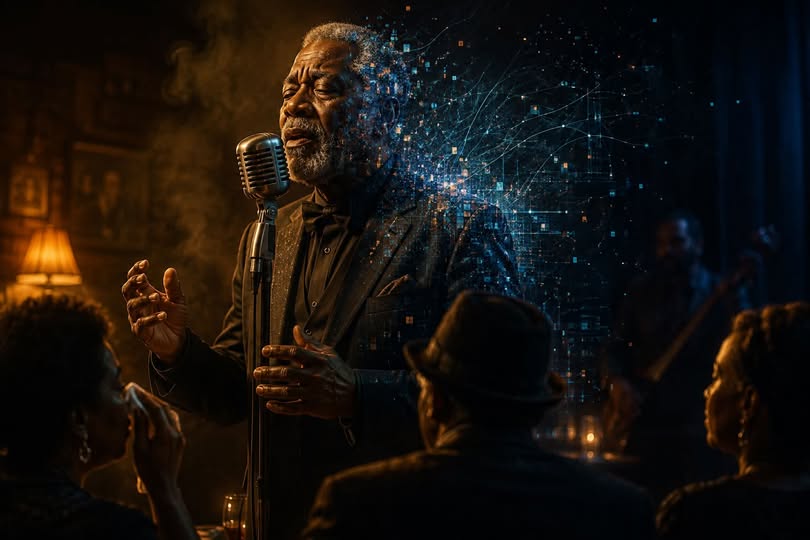
Eddie Dalton appeared online as an older blues and soul singer. His raspy voice and emotional songs quickly found an audience. Listeners celebrated him as an exceptional talent, with many saying they had not heard music this moving and sincere in years.
His achievements were far from insignificant:
- “Another Day Old” reached number one on the US iTunes chart;
- three of his songs appeared simultaneously in the US iTunes Top 5;
- on 5 April 2026, he was reported to have 11 songs in the iTunes Top 100 at the same time, at numbers 3, 8, 15, 22, 42, 44, 51, 58, 60, 68 and 79;
- his album The Years Between reached number three on the iTunes Albums chart;
- by the end of March 2026, his 17 videos had reportedly accumulated approximately eight million views;
- in the Spotify figures I noted for this August article, “Another Day Old” was approaching nine million streams;
- “Stay a Little Longer,” “Cheap Red Wine” and “Running to You” had each received more than five million streams;
- his publicly visible Spotify tracks had accumulated tens of millions of streams in total.
He also achieved impressive results on the official UK charts. “Another Day Old” peaked at number two on both the Singles Sales and Singles Downloads charts and spent eight weeks in each Top 100. “Running to You” reached number three, “Cheap Red Wine” number seven and “Stay a Little Longer” number 22 on the Downloads chart. His album The Years Between reached number four on the UK Album Downloads chart and, by the date of this article, had spent 16 weeks in its Top 100.
Then it emerged that Eddie Dalton did not exist as a human singer. His voice, face, videos and entire public persona had been created using artificial intelligence. The songs involved the human creative work of Dallas Ray Little, but the singer himself was an AI persona.
Suddenly, music that had moved people was being dismissed by some as “fake,” “worthless” and “soulless.” Yet not a single note had changed. The difference was the AI label now attached to it.
Not every listener had been unaware: Little said that many knew it was AI and enjoyed it anyway. But for those who had assumed they were hearing a human singer, the revelation changed the context without changing the sound.
While they did not know how the music had been created, those listeners could encounter it without that particular prejudice. They loved it, bought it and allowed themselves to be genuinely affected by it.
For me, the value of music is not determined by how it was made, but by whether it touches someone.
Eddie Dalton was not a real person, but what his listeners felt was real.
Krys Vega
Eddie Dalton: az AI-énekes, akit addig szerettek, amíg embernek hittek
Eddie Dalton idős blues–soul énekesként jelent meg az interneten. Rekedtes hangja és érzelmes dalai gyorsan közönséget találtak. A hallgatók különleges tehetségként ünnepelték, és sokan azt írták, hogy régóta nem hallottak ennyire megindító, őszinte zenét.
Az eredményei sem voltak jelentéktelenek:
- az „Another Day Old” első lett az amerikai iTunes-listán;
- egyszerre három dala szerepelt az amerikai iTunes Top 5-ben;
- egy 2026. április 5-i beszámoló szerint 11 száma volt egy időben az iTunes Top 100-ban, a 3., 8., 15., 22., 42., 44., 51., 58., 60., 68. és 79. helyen;
- a The Years Between album az iTunes albumlistájának harmadik helyéig jutott;
- a korabeli beszámolók szerint 17 videója már 2026 márciusának végére összesen körülbelül nyolcmillió megtekintést ért el;
- az augusztusi bejegyzéshez feljegyzett Spotify-adatok szerint az „Another Day Old” közel kilencmillió lejátszásnál járt;
- a „Stay a Little Longer”, a „Cheap Red Wine” és a „Running to You” egyenként több mint ötmillió lejátszást gyűjtött;
- a nyilvánosan látható Spotify-számai összesen több tízmillió lejátszásnál tartottak.
A hivatalos brit listákon is komoly eredményeket ért el. Az „Another Day Old” a kislemez-eladási és a kislemez-letöltési lista második helyéig jutott, és mindkettő Top 100-ában nyolc hetet töltött. A „Running to You” harmadik, a „Cheap Red Wine” hetedik, a „Stay a Little Longer” pedig huszonkettedik lett a letöltési listán. A The Years Between album a brit albumletöltési lista negyedik helyét érte el, és a bejegyzés dátumáig összesen 16 hétig szerepelt a Top 100-ban.
Aztán kiderült, hogy Eddie Dalton emberi énekesként nem létezik. Hangja, arca, videói és előadói személyisége mesterséges intelligenciával készült. A dalok mögött Dallas Ray Little emberi alkotói munkája állt, de maga az énekes egy AI-persona volt.
Ekkor a zene, amely korábban meghatotta az embereket, egyesek szemében hirtelen „hamis”, „értéktelen” és „lélektelen” lett. Pedig egyetlen hang sem változott meg. Csak megjelent rajta az AI címke.
Nem minden hallgatót ért meglepetés: Little szerint sokan tudták, hogy AI-zenét hallgatnak, és így is szerették. Akik viszont emberi énekest képzeltek a hang mögé, azok számára a felismerés a körülményeket változtatta meg, magát a zenét nem.
Amíg nem tudták, hogyan készült, ezek a hallgatók ettől az előítélettől mentesen találkozhattak a zenével. Szerették, megvették, és őszintén hagyták, hogy hasson rájuk.
Számomra a zene értékét nem az dönti el, hogyan készült, hanem az, hogy megérint-e valakit.
Eddie Dalton nem volt valódi ember, de amit a hallgatói éreztek, az valódi volt.
Krys Vega