The Problem Isn’t That AI Music Is Bad. It’s That It’s Too Good.
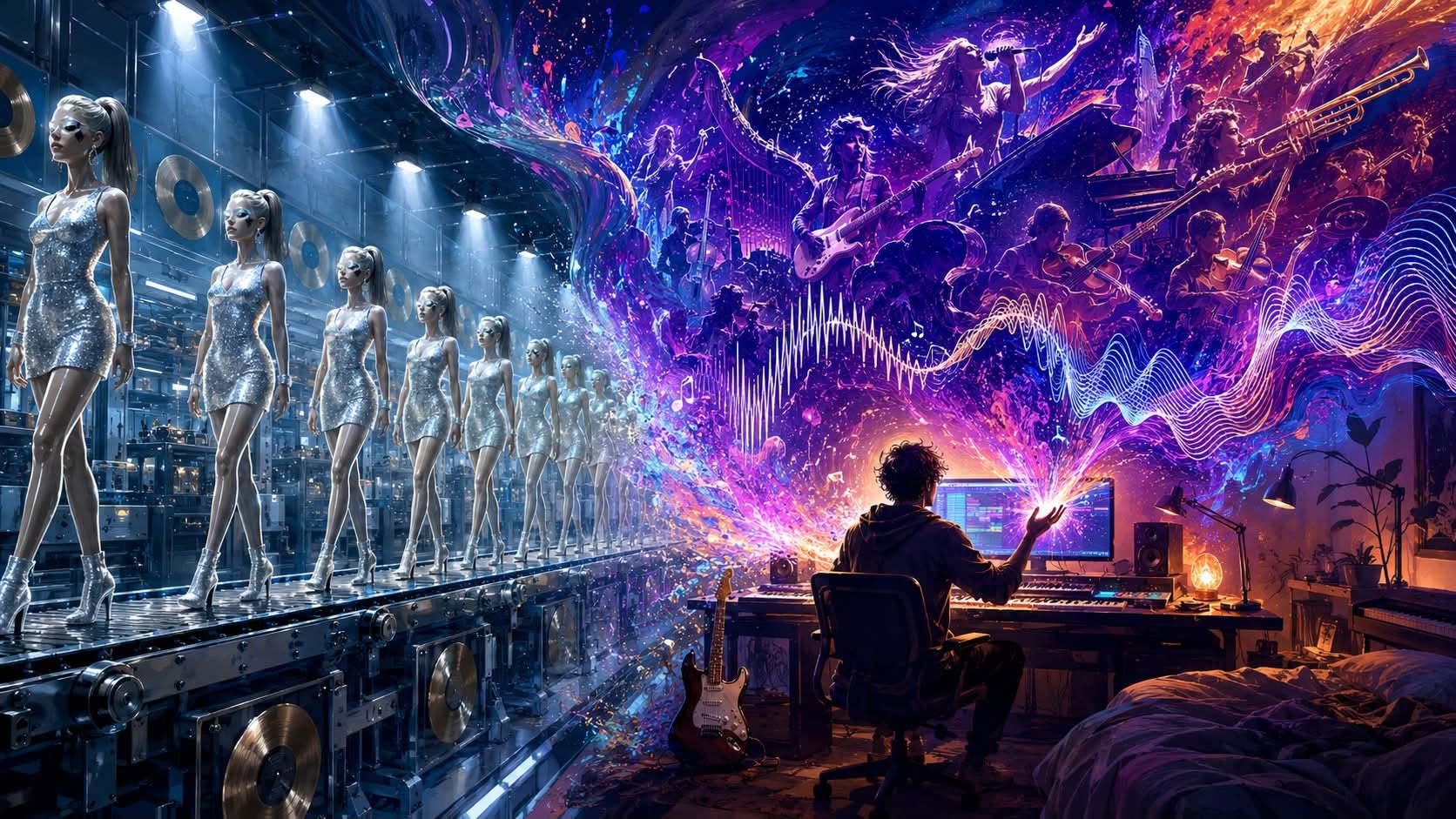
The music industry has suddenly discovered morality. For decades, it happily manufactured the same four chords, the same plastic choruses, and the same carefully packaged, mediocre performers. But now a machine has arrived that can do the same thing faster, cheaper — and, embarrassingly often, better.
Naturally, panic has broken out.
They say AI “steals” because it learns from existing music. Interesting. When a musician spends a lifetime listening to other artists, absorbing their techniques and building a personal sound from those influences, we call it inspiration. When artificial intelligence learns musical patterns, the lawyers arrive. The permissions involved in training are a real question; as a creator, I also question the double standard in how we talk about influence and originality.
To me, the real fear is not that AI will imitate the stars. It is that AI will reveal how many stars were never truly inimitable to begin with.
Until now, an attractive face, a pleasant voice, a team of professional songwriters and producers, and a multimillion-dollar marketing campaign could be enough to sell someone as an “extraordinary talent.” Today, an unknown creator sitting in a bedroom can produce a song with a stronger melody, richer arrangement, and greater emotional impact than a label-manufactured product assembled over several months.
And AI is still only learning to walk.
My prediction is that, within a few years, it will go far beyond generating complete songs. I expect vocals controllable down to the syllable, arrangements that can be edited in ever finer detail, and increasingly coherent, recognisable musical identities. It will not get tired, suffer creative block, or require anyone to tolerate its manager’s tantrums.
That is why I believe mediocre performers are the most frightened. A genuine artist is not made obsolete by a new instrument. The people under threat are those whose “artistry” was always an expensive marketing construction.
I do not believe the labels will stop AI music. The pattern I see is moral outrage, then lawsuits, and finally — once a commercial agreement is reached — a business partnership.
Warner Music Group announced an agreement with Udio on 19 November 2025 that resolved their copyright litigation, followed by a partnership with Suno on 25 November 2025 that also settled their previous dispute. Warner presented the deals as a way to license AI creation, protect artists and open new revenue opportunities.
I do not read this as protecting art. To me, it looks like the desire to keep collecting the admission fee.
AI is not killing music. It is merely exposing how much dead music was already sitting on the charts.
I imagine a future in which polished vocals and professional production are within everyone’s reach. Only one thing will remain scarce: a human being who genuinely has something to say.
And real artists have nothing to fear from that.
Krys Vega
Nem az a baj, hogy az AI-zene rossz. Az a baj, hogy túl jó!
A zeneipar hirtelen felfedezte az erkölcsöt. Évtizedeken át gond nélkül gyártották ugyanazt a négy akkordot, ugyanazokat a műanyag refréneket és ugyanazokat a gondosan becsomagolt, középszerű előadókat. Most azonban megjelent egy gép, amely ugyanezt gyorsabban, olcsóbban — és kínos módon gyakran jobban — csinálja.
Erre természetesen kitört a pánik.
Azt mondják, az AI „lop”, mert meglévő zenékből tanul. Érdekes. Amikor egy zenész egész életében más előadókat hallgat, stílusokat sajátít el, majd ezekből építi fel a saját hangzását, azt inspirációnak nevezzük. Amikor egy mesterséges intelligencia zenei mintázatokból tanul, hirtelen előkerülnek az ügyvédek. A tanításhoz szükséges engedélyek valódi kérdést jelentenek; alkotóként közben azt a kettős mércét is megkérdőjelezem, ahogyan a hatásokról és az eredetiségről beszélünk.
Szerintem a valódi félelem nem az, hogy az AI lemásolja a sztárokat. Hanem az, hogy kiderül: sok sztárban eleve nem volt semmi megismételhetetlen.
Egy szép arc, egy kellemes hang, néhány profi dalszerző, hangmérnök, producer és többmilliós reklámkampány eddig elegendő lehetett ahhoz, hogy valakit „különleges tehetségként” adjanak el. Most egy ismeretlen ember a hálószobájában létrehozhat egy olyan dalt, amely dallamban, hangszerelésben és érzelmi hatásban is erősebb, mint egy kiadó hónapok alatt összerakott terméke.
És az AI még csak most tanul járni.
Az én előrejelzésem az, hogy néhány év múlva jóval többre lesz képes teljes dalok generálásánál. Szótagonként irányítható énekre, egyre aprólékosabban szerkeszthető hangszerelésre és következetesebb, felismerhető zenei világokra számítok. Nem fárad el, nincs alkotói válsága, és nem kell elviselni a menedzsere hisztijét sem.
Ezért gondolom, hogy leginkább a középszerű előadók rettegnek. A valódi művészt nem teszi feleslegessé egy új hangszer. Azt fenyegeti, akinek a „művészete” valójában egy költségesen fenntartott marketingkonstrukció.
Nem hiszem, hogy a kiadók meg fogják állítani az AI-zenét. Én ezt a mintázatot látom: először erkölcsi felháborodás, aztán perek, végül — amikor megszületik az üzleti megállapodás — partnerség.
A Warner Music Group 2025. november 19-én jelentette be az Udióval kötött, a szerzői jogi perüket is rendező megállapodását, november 25-én pedig a Sunóval kötött partnerségét, amely szintén lezárta a korábbi jogvitájukat. A Warner ezeket a licencelt AI-alkotás, a művészek védelme és az új bevételi lehetőségek megteremtéseként mutatta be.
Én ebben nem a művészet védelmét látom, hanem azt a szándékot, hogy továbbra is ők szedjék a belépődíjat.
Az AI nem öli meg a zenét. Csak könyörtelenül megmutatja, mennyi halott zene volt eddig is a slágerlistákon.
Olyan jövőt képzelek el, amelyben a csiszolt énekhang és a professzionális hangszerelés bárki számára elérhető lesz. Egyetlen dolog marad ritka: az ember, akinek valóban van mit mondania.
És ettől nem az igazi művészeknek kell félniük.
Krys Vega